

Can You Take CBD on a Plane in 2026? A Practical Guide for U.S. Travelers
Flying with cbd doesn’t have to be stressful, but it does require knowing the actual rules. Whether you rely on cbd oil for sleep, pop cbd gummies for pre-flight nerves, or pack cbd capsules for post-travel recovery, the legal landscape in 2026 has some clear guidelines and a few serious landmines. Here’s what you need to know before your next trip.
Table of Contents
Quick answer: can you take CBD on a plane right now?
Yes, for U.S. domestic flights, you can generally bring hemp derived cbd products on a plane as long as they contain less than 0.3 thc (delta-9 THC) on a dry weight basis. TSA allows cbd products meeting this standard in both carry on baggage and checked bags. TSA does not actively search for cbd products; their priority is detecting potential threats to aviation security, not policing your wellness routine.
That said, this applies to flights within the United States only. International travel with cbd is a completely different situation, and certain U.S. states still pose risks for cbd users carrying products that don’t meet local regulations.
Here’s a quick breakdown by product type:
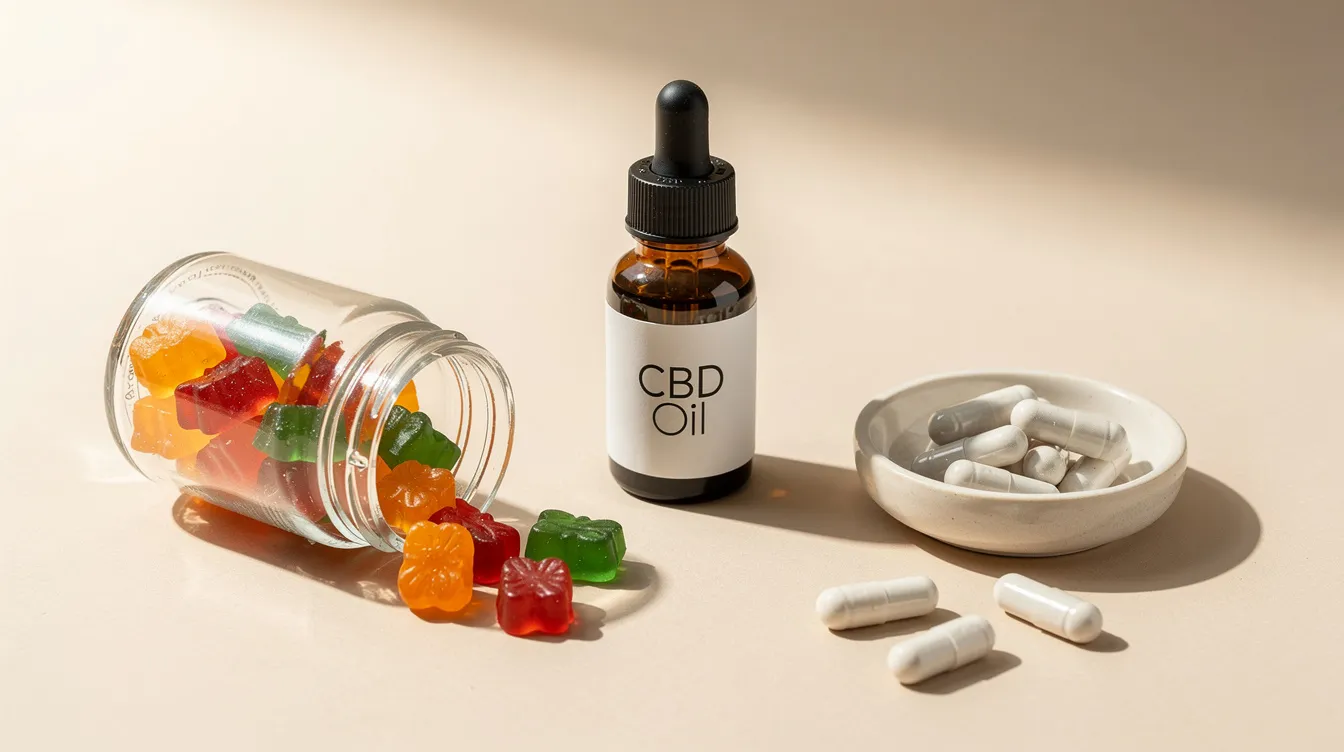
- CBD oil and cbd tinctures: Allowed in carry on bag if under 3.4 fl oz (100 mL) and placed in your quart-size liquids bag. Larger bottles go in checked luggage.
- CBD gummies and cbd edibles: Solid, so not subject to tsa’s liquid restrictions. CBD gummies can be taken on domestic flights without issue.
- CBD capsules: A convenient travel option. No liquid rules apply.
- CBD cream and topicals: Treated as liquids/gels in carry-ons. Travel sizes work best, or pack them in checked luggage.
- CBD vape pens and hemp flower: Higher risk. Vape pens must be stored in carry-on baggage only (airline battery rules). Hemp flower looks and smells like marijuana and is far more likely to trigger a referral to a law enforcement officer.
CBD is known for helping combat travel anxiety and promoting a sense of calm during travel, which is exactly why so many people want to bring it along. The rest of this article will break down the legal details, packing strategies, and international rules so you can fly confidently.
How U.S. law makes flying with CBD possible (and where it stops)
The Agriculture Improvement Act of 2018 (the 2018 Farm Bill) is the reason you can carry cbd products on planes at all. It legalized the hemp plant and its derivatives, including cbd, as long as they contain no more than 0.3% delta-9 THC on a dry weight basis. This removed hemp derived cbd from Schedule I of the controlled substances act, making it federally legal to possess and transport.
But federal law doesn’t override stricter state laws. Individual state laws regarding cbd may vary and can be stricter than federal law. Idaho, for instance, historically requires zero THC in retail cbd products. A bottle labeled “0.3% THC” that’s perfectly fine under federal rules could technically be illegal there. Some states restrict cbd edibles despite federal legality, meaning your cbd gummies might draw scrutiny depending on where you land.
The FDA has still only approved one cbd medication (Epidiolex) as of mid-2026. Most commercial cbd products are not comprehensively regulated, and mislabeling remains common. This matters at airport security because a product that claims to be compliant but actually exceeds legal limits puts you at risk.
At Upright CBD, we don’t sell or promote specific brands. We independently review cbd and cbd related products so you can recognize legitimate labeling versus red flags. We never take sponsorship from any brand. Our mission is simple: give American cbd users actual, honest information.
Allowed in theory vs. high-risk for travel:
- Lower risk: Hemp derived cbd products with clear labels, third-party CoA, 0.3 thc or below, in original packaging
- Higher risk: Unlabeled tinctures, products from unknown brands without CoAs, anything containing delta-8 THC or other cannabinoids banned in certain states, marijuana products of any kind
Official TSA rules on CBD and hemp products (2025–2026)
The transportation security administration updated its cannabis policy in 2019 following the Farm Bill, and the same standard holds in 2026. According to TSA’s official guidance, cannabis infused products are allowed if they are:
- Hemp derived with no more than 0.3% THC on a dry weight basis, or
- An FDA-approved cannabis medication (like Epidiolex) with appropriate prescription documentation.
These rules apply to both carry on bag and checked bags. However, tsa’s liquid restrictions still govern how you pack liquids in carry-ons: cbd oil must be under 3.4 ounces for carry-ons, and the container must fit in a single quart-size bag.
Here’s what tsa officers actually do during security screening:
- Tsa security officers and tsa agent personnel focus on screening procedures aimed at detecting potential threats and other illegal drugs, not hunting for your cbd tinctures.
- They do not perform lab-grade analysis on your products. They rely on packaging, labeling, and visual cues.
- If something looks or smells like marijuana flower, or if a product appears to be an illegal substance, they can and will refer it to a law enforcement officer.
- TSA recommends having documentation for cbd products during travel, and cbd products must be clearly labeled to comply with tsa guidelines.
If an illegal substance is found, TSA must report it to law enforcement. This isn’t about cbd specifically; it’s about anything that appears to violate federal drug laws.
Domestic U.S. travel vs international flights with CBD
The risk gap between flying with cbd domestically and traveling internationally is enormous.
U.S. domestic flights: Hemp derived cbd products under 0.3% THC are generally allowed under federal and tsa guidelines. You can fly cbd domestically with reasonable confidence if your product is properly labeled and compliant. Laws vary by state, but federal hemp rules cover interstate transport.
International flights: International travel with cbd is highly discouraged due to varying legality. Other countries may strictly prohibit cbd, regardless of U.S. law. International travel with cbd is subject to local laws of every country you enter, transit through, or land in.
High-risk countries:
- Japan: Since December 2024, Japan set extremely low THC limits for imports (≤1 ppm for solids like gummies). Most U.S. cbd products exceed this. (Source)
- Singapore: All cannabis derived products, including thc free cbd products, are Class A controlled substances. Severe penalties apply.
- UAE, Saudi Arabia: Zero-tolerance. Even trace THC in a vape cartridge can lead to multi-year sentences.
- Parts of South America: Brazil requires medical prescription for cbd import.
Moderate-risk:
- UK: Allows some cbd under strict Novel Foods regulations, but products must meet specific THC contaminant limits and authorization requirements.
- Canada: Legal cannabis industry domestically, but transporting cannabis products across the border remain illegal.
Before you travel internationally, check:
- Departure country rules
- Destination country rules and international laws
- All transit/layover country rules (strict drug laws in a connecting airport count)
- Your specific airline’s airline rules on cannabis products
If you’re unsure, leave it at home. You can often purchase cbd at your destination if local regulations allow it.
Choosing CBD products that travel better: oils, gummies, capsules, vapes & more
Not all cbd formats are equal at airport security. Some fly under the radar; others practically invite a conversation with a tsa agent.
- CBD oil / tinctures: Liquid, so must follow tsa’s liquid restrictions (3.4 fl oz carry-on limit). Dark glass bottles can invite closer inspection but are usually fine with clear labels. Great for precise dosing.
- CBD gummies and edibles: Solid, so not subject to liquid rules. Extremely travel-friendly in original packaging. Among the easiest ways to take cbd on a flight.
- CBD capsules and softgels: Discreet, easy to dose, and also exempt from liquid rules. CBD capsules are a convenient travel option for anyone who wants zero hassle at screening.
- CBD cream, balms, and roll-ons: Treated as liquids/gels in carry-ons, so keep them under 3.4 oz or pack them in checked luggage. CBD balms are exempt from tsa liquid restrictions if they’re solid at room temperature. CBD creams can be packed in checked luggage without volume limits.
- CBD vapes and hemp flower: Legally and visually the riskiest. Hemp flower is indistinguishable from high-THC cannabis to the naked eye. Vape cartridges must go in carry-on baggage only due to lithium battery rules. Both are more likely to trigger a referral to law enforcement.
If you’re an anxious flyer, prioritize cbd gummies or cbd capsules over vape pens or loose flower. They’re simpler, cleaner, and far less likely to cause problems in 2026.
We don’t push any brand at Upright CBD. We explain what works from a traveler’s perspective so you can make your own informed choice. Study our independent reviews before you buy cbd for your next trip.
Packing CBD in carry-on vs checked luggage
How you pack cbd matters almost as much as what you pack. Here’s the practical breakdown most cbd users need.
Carry-on best practices:
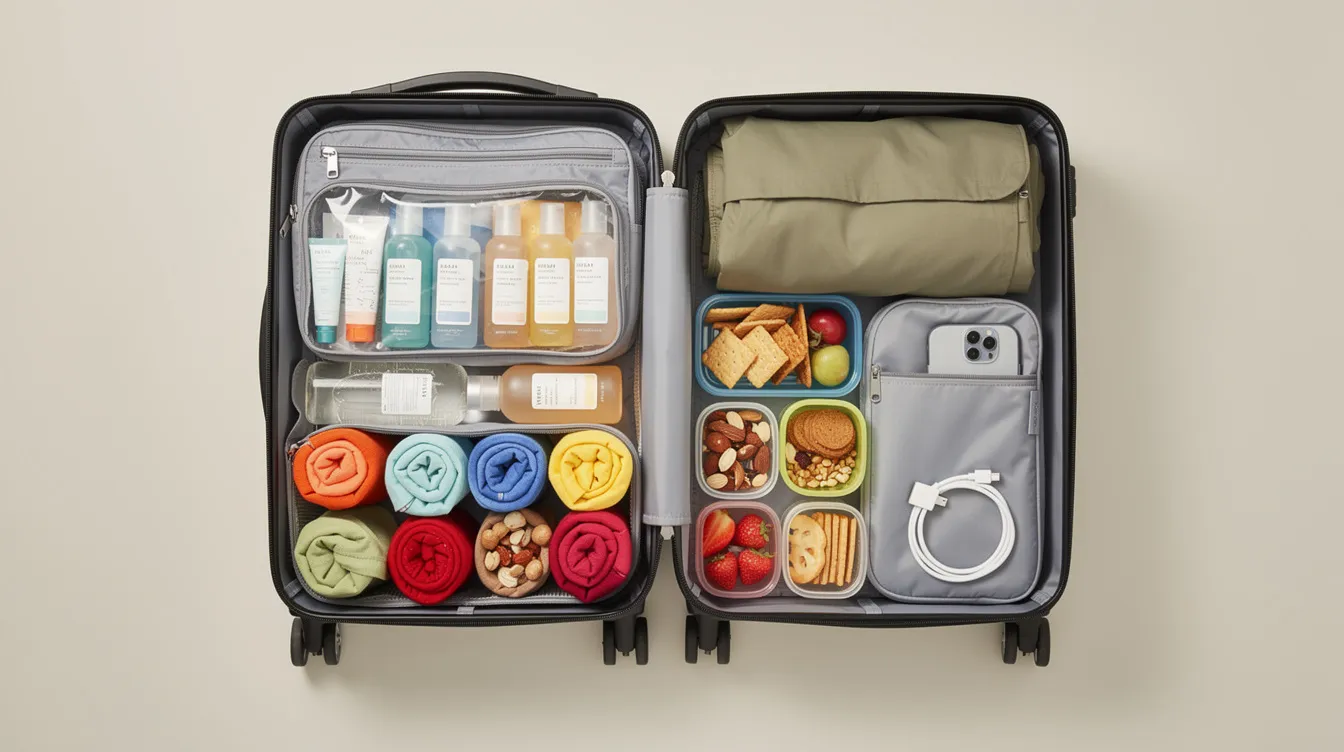
- Keep cbd products you may need during the flight (gummies for anxiety, capsules for sleep, a small cbd oil for landing-day calm) in your carry on bag.
- CBD oils must be in 3.4 ounces or less for carry-ons and placed in your quart-size liquids bag.
- Place cbd near the top of your bag so it’s easy to pull out if a tsa agent wants a closer look during tsa’s screening procedures.
- Keep cbd products in original packaging to avoid issues. Loose, unlabeled containers invite suspicion.
Checked luggage best practices:
- Larger cbd oils, full-size cbd cream bottles, and extra product stock can go in checked luggage as long as they meet thc content limits.
- Checked bags aren’t subject to the 3.4 oz liquid limit, giving you more flexibility.
- Remember: if your checked luggage is lost or delayed, you lose access to your cbd. Plan accordingly if you rely on it for medical reasons.
Quick comparison:
| Factor | Carry-on | Checked Luggage |
|---|---|---|
| Liquid limit | 3.4 fl oz max | No liquid limit |
| Access during flight | Yes | No |
| Transparency at screening | Higher (you’re present) | Lower (inspected without you) |
| Best for | Daily-use cbd, small bottles | Bulk products, full-size creams |
Documentation, labeling, and proof your CBD is legal
In 2026, the safest way to bring cbd oil or any cbd product on a plane is to travel with well-documented, clearly labeled products that match U.S. hemp rules.
A Certificate of Analysis (CoA) verifies thc content in cbd products. It’s your single most important document when flying with cbd. Keep the CoA handy when traveling with cbd products-save a digital copy on your phone and consider printing one for your bag.
Your pre-flight documentation checklist:
- Product label says “hemp derived cbd” or similar wording
- Clear cannabinoid content listed (mg CBD per serving, THC at ≤0.3% or “ND / non-detectable”)
- Batch or lot number on the package that matches an online lab report (CoA)
- U.S. manufacturer address or website on the label
- Third-party CoA downloaded as PDF or screenshot, accessible on your phone
- Products in original packaging with intact seals when possible
- For FDA-approved cbd medicines: consider carrying a note from your healthcare provider (not a legal shield, but helpful context)
TSA requires cbd products to be clearly labeled. An unmarked dropper bottle of amber liquid raises questions. A clearly labeled cbd isolate tincture with a matching CoA does not.
At Upright CBD, we do independent reviews specifically so you can recognize legitimate labeling versus red flags before you ever step into an airport. We encourage you to study our stories-we never take sponsorship or affiliate from any brand to promote. Honesty is the standard.
State-to-state variability and high-risk scenarios inside the U.S.
Even flying cbd domestically means crossing between state legal systems. Federal hemp law covers possession and transport of hemp derived cbd products, but local regulations and enforcement culture still differ.
2025–2026 examples to watch:
- Idaho: Only allows cbd with zero detectable THC. Your federally compliant 0.3% product could be problematic here.
- Texas: Currently fighting over total THC measurement rules (including THCA). Hemp production and retail rules are in flux.
- Midwest and Southern states: Some restrict cbd edibles like cbd gummies in retail, which can color how a local law enforcement officer views your product at the airport.
- Legal marijuana states (California, Colorado): Generally relaxed about cbd, but airports still operate under federal law for outbound flights.
Higher-risk scenarios:
- Carrying large quantities of cbd products that look like commercial stock
- Traveling with unlabeled tinctures in generic dropper bottles
- Carrying hemp flower that is visually indistinguishable from high-THC cannabis from the cannabis plant
Strategies:
- Travel with only what you reasonably need
- Choose thc free cbd products or cbd isolate for routes through stricter states
- When in doubt, buy cbd at your destination instead of carrying it through airport security
Practical tips for a smooth airport experience with CBD
Here’s your final checklist for taking cbd on a plane without headaches.
Before you fly:
- Verify your cbd product is hemp derived and under 0.3 thc via a recent CoA
- Check TSA’s current cannabis/cbd page and your specific airline’s policy on airline rules
- Research cbd laws at your destination and any layover states or countries
- The 2018 Farm Bill allows traveling with cbd under specific conditions-make sure your product meets them
Packing and at security:
- Pack cbd oil and other liquids under 3.4 fl oz in your quart-size liquids bag
- Pack cbd gummies, cbd capsules, and cbd edibles in original containers, well labeled
- Avoid hemp flower or anything that looks or smells like marijuana or other illegal drugs
- CBD vape pens must be stored in carry-on baggage only
During the flight and after landing:
- CBD may help ease muscle tension and stiffness while traveling and can help regulate sleep during long trips. Dose conservatively-air travel can change how quickly you feel effects.
- Many travelers use cbd to manage post-travel recovery, so keep your preferred product accessible.
- You cannot access cbd in checked bags until baggage claim.
- On international routes, remember you’re still carrying cbd when going through customs. Drug laws and penalties vary widely, and some cannabis products that are federally legal here remain illegal in your destination country.
Upright CBD does not encourage skirting laws. Our goal is to help American travelers use honest, well-documented cbd safely-or decide to leave it at home when cbd laws are unclear. We hold cbd honesty to the utmost for our readers. Explore our independent reviews and product breakdowns to find cannabis derived products and cbd products derived from verified, transparent sources before your next flight.

Recent Comments